 Merken
 Last spring, I found myself standing in my kitchen at dusk, watching the light turn golden across my countertop, when a friend texted asking if she could bring someone new to dinner that night. I had peas from the farmers market and a half-empty bottle of white wine, and suddenly I understood what risotto could be—not fussy or intimidating, but a way to turn a few simple ingredients into something that feels like you've been cooking all day. Mint from the garden made everything sing. That meal became the thing people still ask me to make.
There's something about stirring risotto that makes people want to linger in the kitchen with you. My partner once sat on the counter the entire time I was making this, stealing tastes of mint from the pile I'd chopped, asking questions about why we kept adding liquid instead of all at once. By the time we sat down to eat, we'd already had half the conversation we needed to have that week. Food doesn't always have to feed a crowd to matter.
Ingredients
- Fresh or frozen green peas (1 cup/150 g): Fresh peas taste like the season itself, but frozen are honestly just as good and sometimes better because they're picked at peak ripeness—add them only at the end so they stay bright and tender instead of turning dull.
- Arborio rice (1 1/2 cups/300 g): This short-grain variety releases starch as it cooks, which is what makes risotto creamy without cream, so don't swap it for long-grain rice or the whole thing falls apart.
- Small onion, finely chopped: The foundation of everything; take your time chopping because tiny pieces dissolve into the rice and build flavor without bites of onion interrupting the creaminess.
- Garlic cloves, minced (2): Just enough to whisper in the background, not shout—mince it fine and add it quickly after the onion so it doesn't burn.
- Vegetable stock, kept warm (4 cups/1 L): Keeping it warm matters more than you'd think because cold stock shocks the rice and slows cooking, so use a separate pot and keep it simmering nearby.
- Dry white wine (1/2 cup/120 ml): The acidity brightens everything and the alcohol cooks off, leaving only flavor; Sauvignon Blanc or Pinot Grigio work beautifully.
- Unsalted butter, divided (3 tbsp): Use two tablespoons for the beginning sauté and the final tablespoon at the end, which creates that silky finish—butter matters here in a way it doesn't in other dishes.
- Freshly grated Parmesan cheese (1/2 cup/40 g plus extra): Grate it yourself right before cooking because pre-grated cheese has anti-caking agents that make it grainy; the fresh kind melts into the risotto like velvet.
- Fresh mint leaves, finely chopped (1/4 cup/10 g): This is the soul of the dish, so use leaves that smell bright and alive, and chop them just before serving so they don't turn dark.
- Fresh flat-leaf parsley, chopped (2 tbsp optional): A gentle herbal note that rounds out the mint without fighting it, completely optional but nice if you have it.
- Lemon zest (from 1 lemon): Just the colored part, none of the bitter white pith; this small touch lifts everything and makes people wonder what the secret ingredient is.
- Salt and freshly ground black pepper, to taste: Hold back while cooking because the cheese is salty, then taste at the end and adjust—this is your chance to make it exactly right.
Tired of Takeout? 🥡
Get 10 meals you can make faster than delivery arrives. Seriously.
One email. No spam. Unsubscribe anytime.
Instructions
- Melt the butter and start with aromatics:
- In a large saucepan over medium heat, melt two tablespoons of butter and watch it foam slightly—this is your signal that it's hot enough. Add the chopped onion and stir occasionally until it turns translucent and soft, about four minutes; you're not looking for color, just for the onion to surrender its raw bite. Add the minced garlic and stir constantly for about a minute until the kitchen smells like warm garlic butter, then move immediately to the next step so the garlic doesn't scorch.
- Toast the rice:
- Pour the Arborio rice into the pan and stir constantly for about two minutes, letting each grain get coated in butter and slightly translucent at the edges. You'll hear the rice click slightly against the pan and smell something nutty and toasty, which means the starches are beginning to open up and the rice is ready for liquid.
- Add the wine and let it work:
- Pour in the white wine all at once and stir, watching it sizzle and get absorbed by the rice, about two to three minutes. The acidity mellows the butter and adds a subtle brightness that balances everything else, so don't skip this step or rush it.
- Build the creaminess with stock:
- Using a ladle, add the warm vegetable stock one ladleful at a time, stirring constantly and waiting until most of the liquid is absorbed before adding the next one. This takes about eighteen to twenty minutes and feels repetitive, but this constant stirring is what releases the rice's natural starch and creates that silky creaminess—resist the urge to walk away or set a timer and forget about it. The rice should always look slightly wetter than you'd expect, with a gentle wave when you drag your spoon across it.
- Add the peas at the end:
- During the last five minutes of cooking, stir in the fresh or frozen peas and continue stirring until the rice is creamy and each grain is tender but still has a slight firmness in the center when you bite it. The peas will stay bright green instead of turning gray, which is the whole point of waiting until the end.
- Finish with butter, cheese, and herbs:
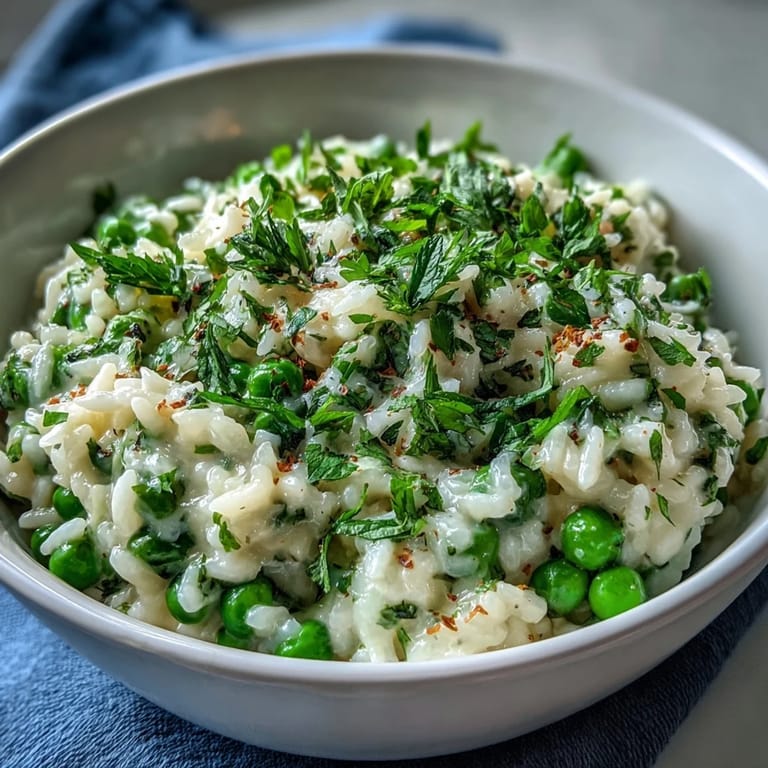
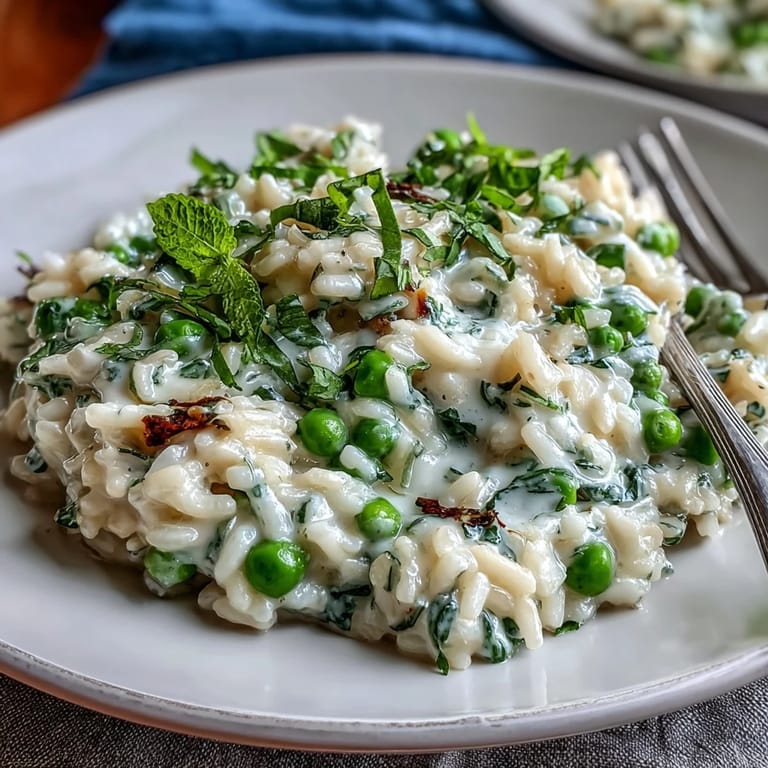
- Remove the pan from heat and stir in the remaining tablespoon of butter, the grated Parmesan cheese, chopped mint, parsley if you're using it, lemon zest, and salt and pepper to taste. This final stirring should feel luxurious—the butter and cheese create a glossy, creamy sauce that coats each grain. Keep stirring for about a minute until everything is combined and the risotto looks like it's practically glowing.
- Taste and serve immediately:
- Taste a small spoonful and adjust the seasoning, because this is your last chance—the risotto continues to thicken as it sits, so serve it right away in warm bowls with an extra handful of Parmesan and a few fresh mint leaves on top.
 Merken
 I once made this for someone I was trying to impress and forgot that risotto waits for no one, so I kept the plates warm while I obsessed over the seasoning, and by the time we sat down it had set up like porridge. Now I serve it immediately, the moment it's done, which somehow feels like the whole point—some dishes demand to be eaten at their exact best moment, and there's something honest about that. When it's good, it's transcendent enough that nobody will forgive you if it's cold.
The Secret of Stirring
The stirring is where the magic lives, and I don't say that lightly. Every time you drag your wooden spoon through the rice, you're breaking down the outside of each grain slightly, releasing starch into the liquid and creating that signature creamy texture. I used to think this was annoying busywork until I realized that standing there for twenty minutes, watching the rice gradually soften and the liquid reduce, is actually meditation—your hands know what to do, and your mind can wander. The kitchen gets quiet except for the sound of the spoon moving through the pan, and somehow that's when you're most present.
Timing and Temperature Matter
Risotto is particular about both. If your heat is too high, the liquid evaporates faster than the rice can absorb it, and you end up with half-cooked grains and a gluey bottom. Too low and everything takes forever and loses its liveliness. Medium heat on most stoves is the sweet spot—you want a gentle simmer in the stock pot and that quiet sizzle in the pan when you stir. The whole process should feel unhurried, like cooking is something you're doing with your hands, not something you're waiting for someone else to finish.
Variations and Occasions
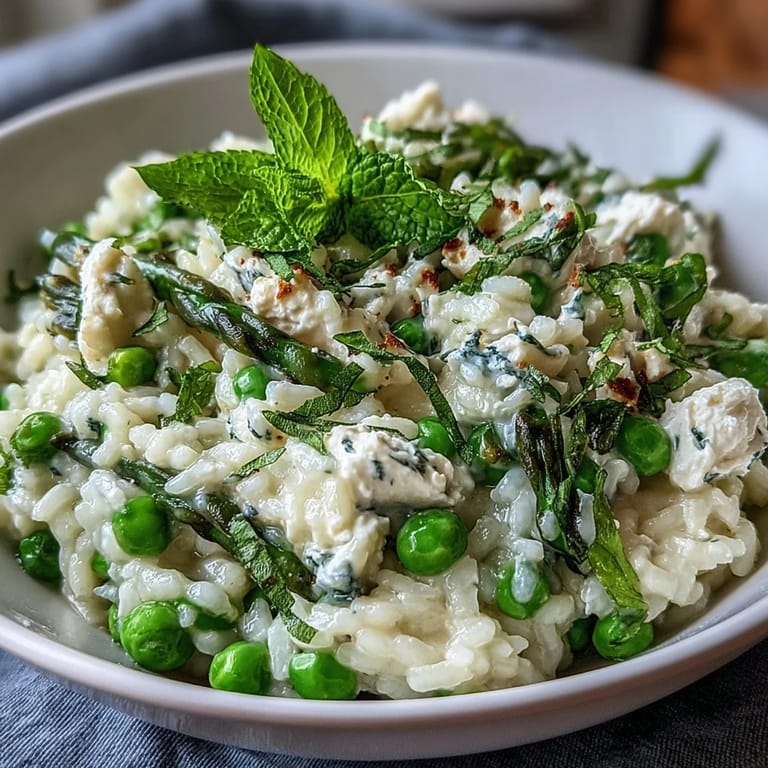
This risotto is flexible enough for weeknight improvisation but elegant enough for the dinner party that makes you want to impress people. I've made it with champagne instead of white wine when I wanted to feel fancy, and with different fresh herbs depending on what's growing in the garden or available at the market. The structure stays the same, but the soul shifts—summer mint becomes autumn sage, spring peas become roasted mushrooms in October. Once you understand how risotto works, you realize you can build it a hundred different ways.
- Try adding a handful of roasted mushrooms or asparagus pieces if you want something more substantial without changing the cooking method.
- A drizzle of good-quality olive oil before serving adds richness and flavor that butter alone can't quite achieve.
- Serve alongside a crisp white wine because the acidity of the wine matches the brightness of the mint and lemon, and somehow they make each other taste better.
 Merken
 This risotto is the kind of dish that reminds you why cooking for people matters. It asks for presence, for attention, for your hands and your focus, and in exchange it delivers something warm and simple that tastes like care. Make it when spring feels new again or whenever you want to turn an ordinary evening into something memorable.
Rezept-Fragen
- → Wie verhindere ich, dass das Risotto zu trocken wird?
Fügen Sie die Gemüsebrühe langsam und portionsweise hinzu, rühren Sie ständig, damit der Reis cremig bleibt und nicht klebt.
- → Kann ich gefrorene Erbsen verwenden?
Ja, gefrorene Erbsen sind ein guter Ersatz. Geben Sie sie gegen Ende der Kochzeit hinzu, damit sie ihre Frische behalten.
- → Wie integriere ich die Minze am besten?
Die fein gehackte Minze wird kurz vor Ende unter das Risotto gemischt, um ihr Aroma frisch zu bewahren.
- → Welcher Wein passt zu diesem Gericht?
Ein trockener Weißwein wie Sauvignon Blanc oder Pinot Grigio ergänzt die Aromen besonders gut.
- → Wie erreiche ich die perfekte Konsistenz beim Risotto?
Der Reis sollte cremig, aber noch bissfest (al dente) sein. Dauerndes Rühren und schrittweises Hinzufügen von Brühe sind entscheidend.