 Merken
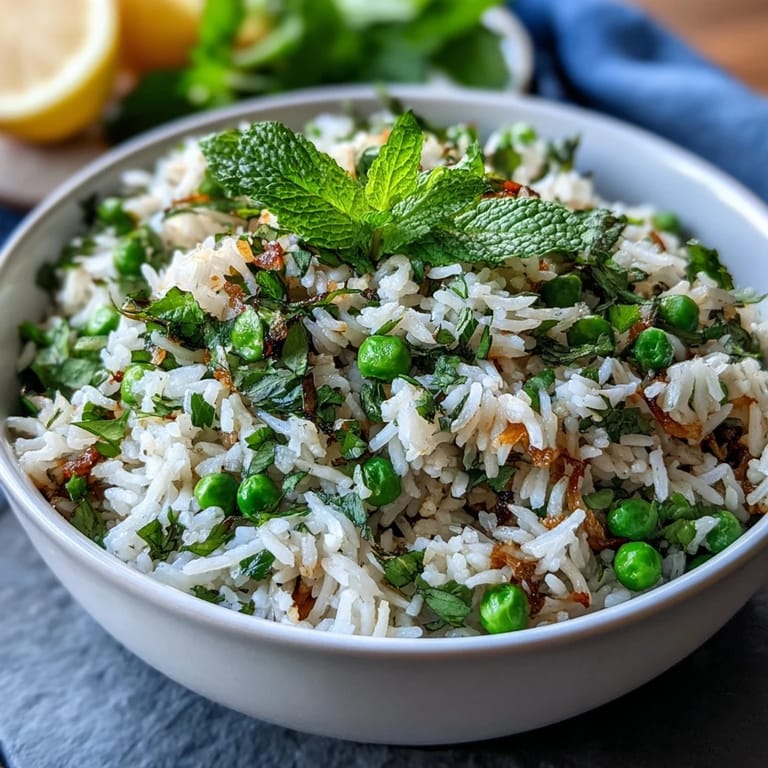
 There's something about the smell of butter hitting a hot pan that makes you pause mid-morning and think about lunch. One Easter, my neighbor stopped by with a bundle of fresh mint from her garden, still dewy and fragrant, and I realized I had exactly what I needed to make something bright and unexpected. That's when this pilaf came together, a dish that somehow tastes like spring feels, all tender and hopeful and green.
I served this alongside a honey-glazed ham at a small dinner party, and someone actually set down their fork mid-bite to comment on it. That moment taught me that side dishes deserve as much care as the star of the plate, and this one quietly steals the show every single time.
Ingredients
- 1 cup long-grain white rice (basmati or jasmine): These varieties stay fluffy and separate, never mushy, which means your pilaf will have that perfect tender bite.
- 2 cups low-sodium vegetable broth: Low-sodium lets the delicate pea and mint flavors shine without background noise.
- 1 cup fresh or frozen spring peas: Frozen peas work beautifully here and are picked at peak ripeness, so don't hesitate to use them if fresh aren't available.
- 1 small yellow onion, finely chopped: The sweetness of yellow onions complements the brightness of mint in ways white onions simply can't.
- 2 tablespoons unsalted butter: Unsalted gives you control over the salt level, and the butter toasts the rice grains to add subtle depth.
- 2 cloves garlic, minced: Garlic mellows beautifully when cooked this way, adding whisper-soft savory notes rather than sharpness.
- 1/2 cup fresh mint leaves, finely chopped: Add the mint at the very end so it stays vibrant green and doesn't lose its fresh edge to heat.
- 2 tablespoons fresh flat-leaf parsley, chopped: Optional, but it adds a gentle earthiness that balances the mint's sweetness.
- 1 teaspoon lemon zest: Zest only the yellow part, never the bitter white pith, for that bright citrus punch.
- 1/2 teaspoon salt, plus 1/4 teaspoon freshly ground black pepper: Taste as you go, because salt preferences vary and the broth brings its own subtle seasoning.
Tired of Takeout? 🥡
Get 10 meals you can make faster than delivery arrives. Seriously.
One email. No spam. Unsubscribe anytime.
Instructions
- Rinse and prepare the rice:
- Run cold water over the rice in a fine mesh strainer, stirring gently with your fingers until the water runs clear. This removes excess starch that would otherwise make the rice sticky and clumpy.
- Toast the aromatics:
- Melt butter over medium heat, then add the chopped onion and let it soften and turn translucent, about 2 to 3 minutes. You'll notice the kitchen start to smell sweet and savory at once.
- Bloom the garlic:
- Add minced garlic for just 30 seconds, stirring constantly so it doesn't burn and turn bitter. That fragrant moment tells you the pan is ready for the rice.
- Toast the rice:
- Stir the rinsed rice into the butter and aromatics, coating each grain thoroughly. This step adds a subtle nutty flavor and helps keep the grains separate during cooking.
- Simmer the rice:
- Pour in the vegetable broth, add salt and pepper, and bring everything to a boil. Once it reaches a boil, reduce the heat to low, cover tightly, and let it cook undisturbed for 15 minutes.
- Add the peas:
- Stir in the peas directly from frozen or fresh, and cover again for another 5 minutes until the rice is tender and the liquid is completely absorbed. You'll know it's ready when no water pools at the bottom of the pan.
- Rest and fluff:
- Turn off the heat and let the covered rice sit for 5 minutes. This resting period lets the grains fully absorb any remaining moisture and firm up.
- Finish with fresh herbs:
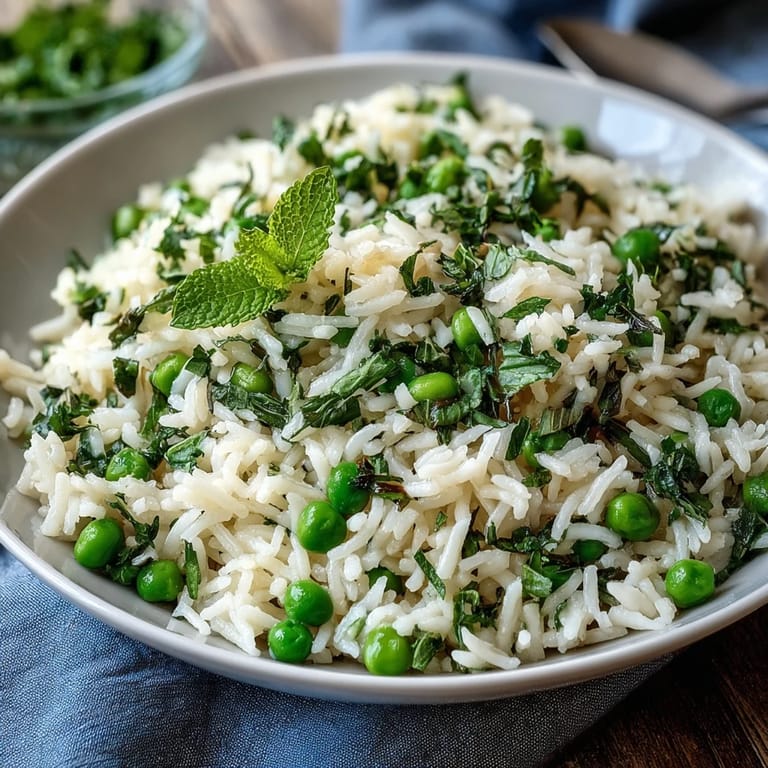
- Fluff the rice gently with a fork, then stir in the chopped mint, parsley if using, and lemon zest. The heat from the rice will soften the mint just enough to release its oils without dulling its brightness.
- Taste and adjust:
- Taste a forkful and adjust the salt and pepper to your preference before serving. Lemon wedges on the side let everyone brighten their portion to their liking.
 Merken
 I once made this for a friend who was recovering from surgery, and she told me later that the smell of the mint brought her back to feeling human again. Food like this reminds you that cooking isn't just about hunger, it's about care.
Why Fresh Mint Matters
Dried mint and fresh mint are different plants in the kitchen. Fresh mint has a brightness and almost cooling quality that dried mint, which turns dusty and medicinal, can never match. If you only have dried mint on hand, use about 2 teaspoons instead of the full 1/2 cup, stirring it in during the last minute of cooking so it hydrates slightly and releases its flavor.
Making It Your Own
This pilaf is a canvas, which means it welcomes changes based on what you have and what you're craving. I've added crispy shallots for texture, stirred in a handful of toasted pine nuts for richness, and once swapped half the mint for basil and added sun-dried tomatoes when spring arrived late that year. The base is forgiving enough that you can play around without losing what makes it special.
Storage and Reheating Tips
This pilaf actually improves in flavor after a day or two in the refrigerator as the mint and lemon zest continue to infuse the rice. To reheat, gently warm it in a saucepan over low heat with a splash of vegetable broth or a drizzle of olive oil, stirring occasionally until it's warmed through. You can also serve it at room temperature the next day as a light lunch, which is something I discovered by accident and now do intentionally.
- Cover and refrigerate for up to 3 days in an airtight container.
- Freezing isn't recommended as the texture becomes slightly grainy when thawed.
- For meal prep, make the rice ahead and add the fresh herbs and lemon zest just before serving for maximum brightness.
 Merken
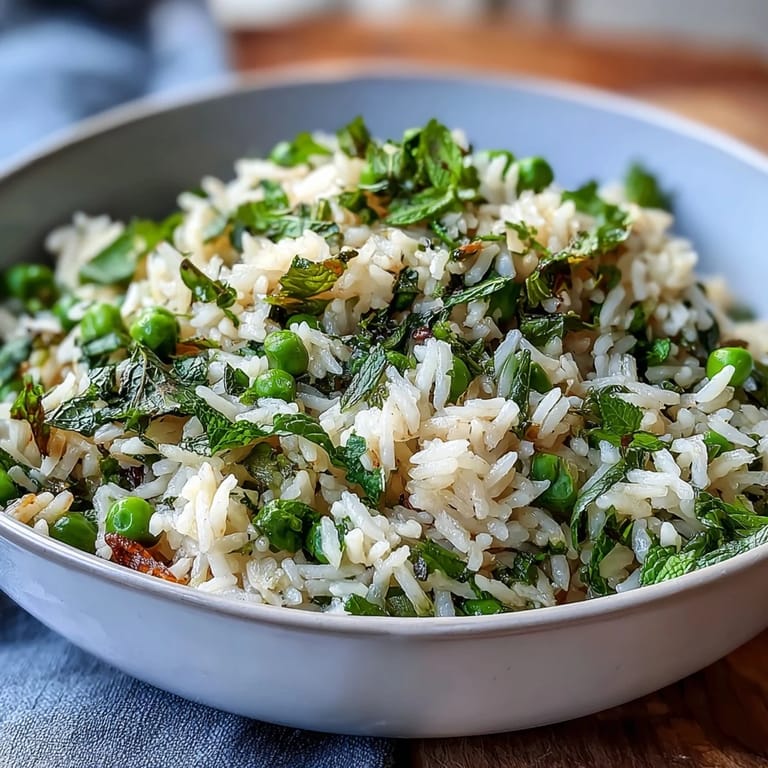
 This pilaf sits at the table like it belongs there, humble and bright, asking nothing but offering everything. It's the kind of dish that reminds you why simple cooking, done with attention, is worth the small effort.
Rezept-Fragen
- → Wie wird der Reis am besten zubereitet?
Den Reis gründlich spülen, damit überschüssige Stärke entfernt wird. Danach in Butter mit Zwiebeln und Knoblauch anbraten, bevor Gemüsebrühe hinzugesetzt und der Reis sanft gekocht wird.
- → Kann ich gefrorene Erbsen anstelle frischer verwenden?
Ja, gefrorene Erbsen können direkt aus dem Gefrierfach hinzugefügt werden, um Zeit zu sparen, ohne dabei Geschmack oder Textur einzubüßen.
- → Welche Kräuter eignen sich neben Minze noch gut?
Frische Petersilie ergänzt das Aroma ideal, aber auch Schnittlauch oder Koriander können für eine interessante Variation sorgen.
- → Wie kann ich das Gericht vegan gestalten?
Butter durch pflanzliche Alternativen ersetzen und darauf achten, dass die Brühe vegan ist, um das Gericht tierfrei zuzubereiten.
- → Wie lange dauert die Zubereitung insgesamt?
Die gesamte Zubereitung nimmt etwa 35 Minuten in Anspruch, inklusive Anbraten, Köcheln und Ruhezeit für den Reis.