 Merken
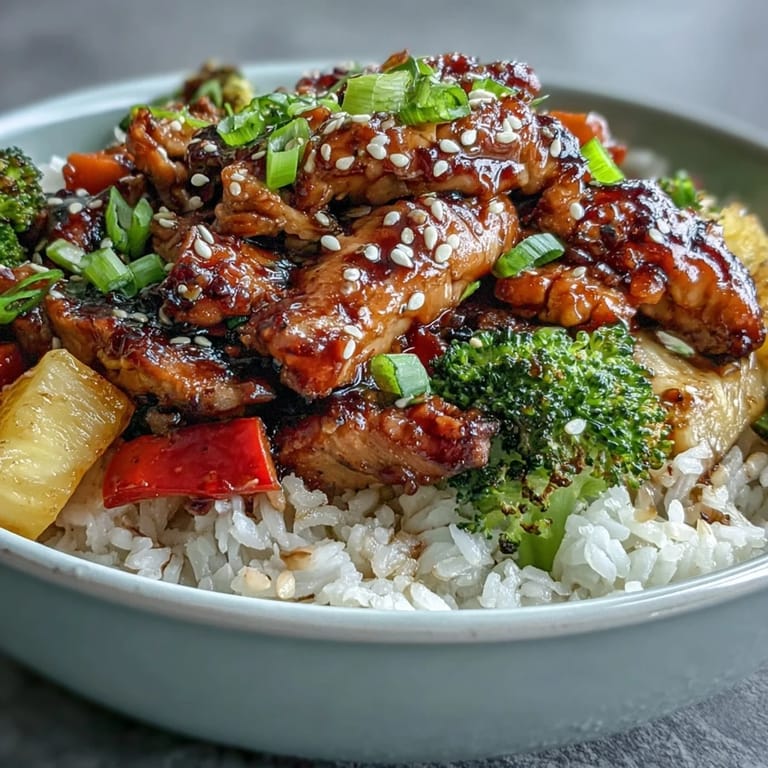
 A vibrant fusion of Japanese and American culinary traditions, this Teriyaki Chicken and Rice Bowl brings together succulent chicken glazed in a sweet-savory sauce with colorful vegetables and tropical pineapple. The magic happens when the homemade teriyaki sauce caramelizes around tender chicken pieces, creating a glossy coating that's irresistibly flavorful. Perfect for busy weeknights yet impressive enough for guests, this nutritious bowl delivers a balance of protein, carbohydrates, and vegetables in every bite.
Merken The beauty of this recipe lies in its harmonious contrasts—the warm, umami-rich chicken against cool, juicy pineapple; fluffy rice soaking up the glossy sauce; and crisp-tender vegetables adding color and nutrition. Each component plays a vital role in creating a bowl that satisfies all the senses. The homemade teriyaki sauce, with its perfect balance of soy sauce, mirin, and honey, transforms simple ingredients into an extraordinary meal.
- For the Chicken and Marinade: 1.5 lbs (680 g) boneless, skinless chicken thighs or breasts, cut into bite-sized pieces; 1/3 cup (80 ml) soy sauce; 1/4 cup (60 ml) mirin (Japanese sweet rice wine); 2 tbsp brown sugar; 2 tbsp honey; 1 tbsp rice vinegar; 2 cloves garlic, minced; 1 tsp fresh ginger, grated; 1 tsp sesame oil; 1 tbsp cornstarch + 2 tbsp water (slurry for thickening)
- For the Rice: 2 cups (400 g) jasmine or short-grain white rice; 3 cups (720 ml) water; Pinch of salt
- For the Vegetables: 1 cup (150 g) broccoli florets; 1 cup (120 g) carrots, sliced thin; 1 cup (120 g) red bell pepper, sliced; 1 cup (100 g) snap peas; 1 tbsp vegetable oil
- For Garnish: 1 cup (150 g) fresh pineapple, diced; 2 tbsp scallions, sliced; 1 tsp toasted sesame seeds
Tired of Takeout? 🥡
Get 10 meals you can make faster than delivery arrives. Seriously.
One email. No spam. Unsubscribe anytime.
- 1. Prepare the rice
- Rinse the rice under cold water until the water runs clear. Combine rice, water, and a pinch of salt in a saucepan. Bring to a boil, reduce heat, cover, and simmer for 15 minutes. Remove from heat and let stand, covered, for 10 minutes.
- 2. Make the teriyaki sauce
- In a small bowl, whisk together soy sauce, mirin, brown sugar, honey, rice vinegar, garlic, ginger, and sesame oil.
- 3. Marinate the chicken
- Place chicken pieces in a bowl and pour half of the teriyaki sauce over them. Toss to coat and let marinate while preparing the vegetables (at least 10 minutes).
- 4. Stir-fry the vegetables
- Heat vegetable oil in a large skillet or wok over medium-high heat. Add broccoli, carrots, bell pepper, and snap peas. Stir-fry for 3–4 minutes until crisp-tender. Remove vegetables and set aside.
- 5. Cook the chicken
- In the same pan, add marinated chicken. Cook for 6–8 minutes, stirring occasionally, until browned and cooked through.
- 6. Thicken the sauce
- Add the remaining teriyaki sauce to the pan. Stir the cornstarch with water to create a slurry, then add to the sauce. Simmer 2–3 minutes until thick and glossy.
- 7. Assemble the bowl
- Fluff the cooked rice and divide among four bowls. Top with teriyaki chicken, sautéed vegetables, and diced pineapple. Sprinkle with scallions and sesame seeds.
Für die perfekte Textur des Hühnchens, schneiden Sie es gegen die Faser in gleichmäßige Stücke. Dies garantiert eine gleichmäßige Garzeit und maximale Zartheit. Die Teriyaki-Sauce kann bis zu einer Woche im Kühlschrank aufbewahrt werden – machen Sie ruhig eine größere Menge für weitere Gerichte. Achten Sie beim Anbraten des Gemüses darauf, es nicht zu überkochen – knackiges Gemüse bietet einen wunderbaren Kontrast zur saftigen Hähnchenbrust und dem weichen Reis.
Dieses vielseitige Gericht lässt sich leicht an persönliche Vorlieben anpassen. Für eine vegetarische Version ersetzen Sie das Hähnchen durch Tofu oder Tempeh. Glutenfreie Alternativen sind mit tamari statt Sojasauce möglich. Experimentieren Sie mit verschiedenen Gemüsesorten wie Pilzen, Zucchini oder Babymais. Für eine kohlenhydratärmere Option können Sie den weißen Reis durch Blumenkohlreis ersetzen oder die Reismenge reduzieren und mehr Gemüse hinzufügen.
Servieren Sie die Teriyaki-Hähnchen-Reisbowl direkt nach der Zubereitung, wenn alle Komponenten noch warm sind und die Sauce schön glänzt. Für eine komplette Mahlzeit reichen Sie dazu einen einfachen Gurken-Salat mit Reisessig-Dressing oder eine leichte Miso-Suppe. Ein kühler Ingwer-Tee oder ein knackiger Sauvignon Blanc ergänzen die süß-würzigen Aromen perfekt. Für ein authentisches Erlebnis verwenden Sie Essstäbchen und tiefe Schüsseln.
 Merken
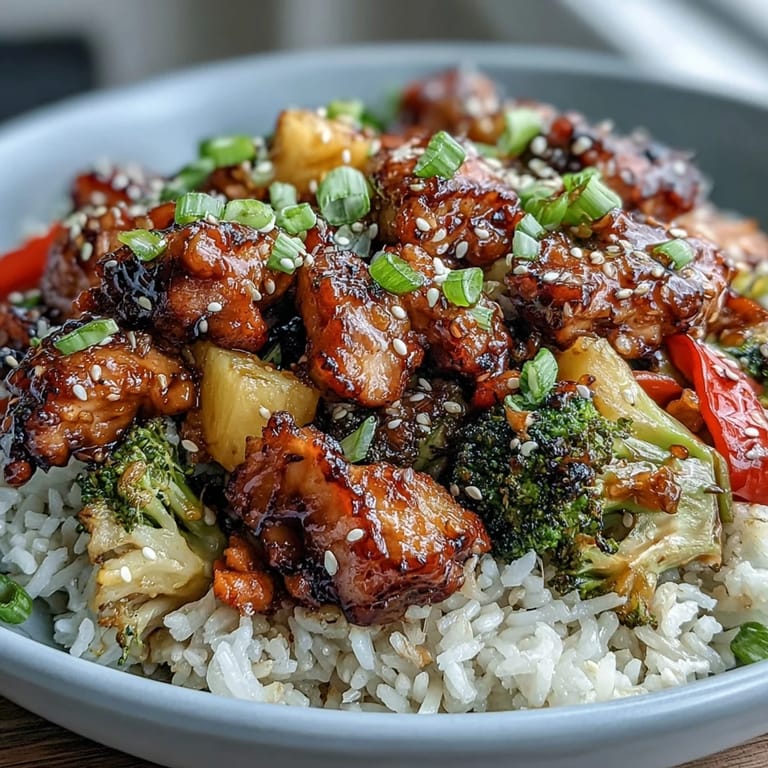
 This Teriyaki Chicken and Rice Bowl embodies the essence of comfort food with a gourmet twist. The combination of umami-rich teriyaki chicken, perfectly cooked rice, vibrant vegetables, and sweet pineapple creates a meal that nourishes both body and soul. Whether you're cooking for your family on a busy weeknight or impressing guests with your culinary skills, this recipe delivers exceptional flavor with minimal effort. Each bowl tells a story of cultural fusion, bringing the best of Japanese and American cuisines to your table in a beautiful, balanced meal.
Rezept-Fragen
- → Wie mariniert man das Hühnchen richtig?
Das Hühnchen wird mindestens 10 Minuten in einer Mischung aus Sojasauce, Mirin, Honig, braunem Zucker und Gewürzen eingelegt, um die Aromen gut aufzunehmen.
- → Welcher Reis eignet sich am besten als Basis?
Lockerer Jasminreis oder Rundkornreis sorgt für die ideale Textur und nimmt leicht die Aromen der Sauce auf.
- → Wie bleibt das Gemüse knackig?
Das Gemüse wird bei hoher Hitze nur kurz in Öl angebraten, damit es seine Frische und Bissfestigkeit behält.
- → Kann man die Teriyaki-Glasur selbst herstellen?
Ja, die Glasur entsteht durch eine Kombination aus Sojasauce, Mirin, Honig, braunem Zucker und einer Maisstärke-Wasser-Mischung als Bindemittel.
- → Welche Alternativen gibt es für das Hühnchen?
Tofu oder Tempeh sind geeignete pflanzliche Alternativen, die ähnliche Aromen aufnehmen können.