 Merken
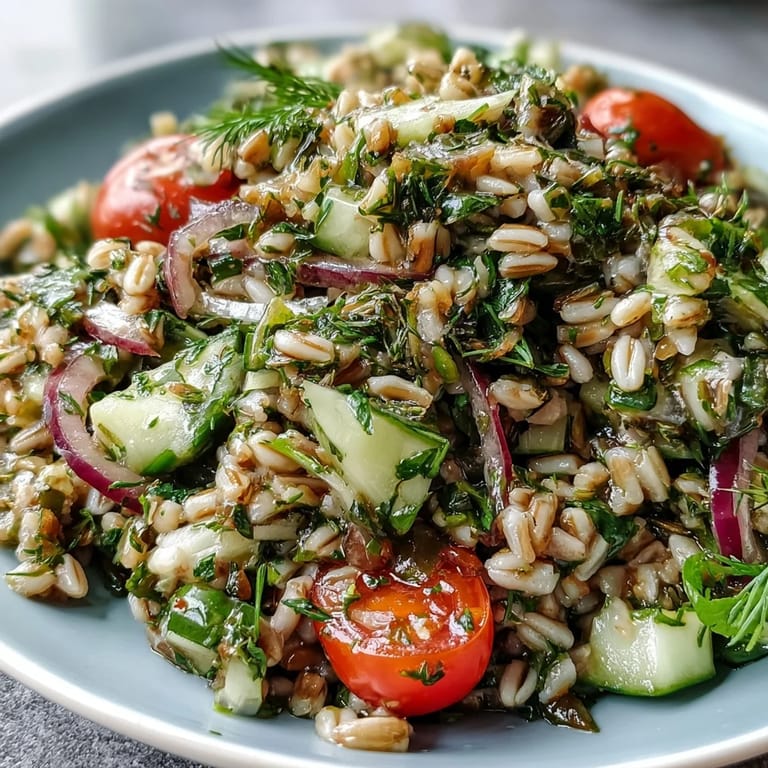
 One humid afternoon, a farmer's market visit turned into an unexpected discovery when I grabbed a bag of pearl barley instead of my usual rice. The vendor mentioned how it pairs beautifully with fresh herbs, and something about that simple suggestion stuck with me. By evening, I'd tossed it with whatever greenery was wilting in my crisper drawer, added a bright lemon dressing, and suddenly I had a salad that tasted like summer in a bowl. It's become my go-to when I want something that feels both nourishing and light, without any fuss.
I served this at a casual picnic last spring, and watching people go back for seconds surprised me—they expected something heavy, but instead found themselves drawn to its freshness. One friend asked for the recipe right then, sitting on a blanket with a fork in hand, which felt like the highest compliment.
Ingredients
- Pearl barley, 1 cup rinsed: The backbone of this salad with its chewy texture and subtle earthiness—rinsing removes excess starch so each grain stays tender rather than gummy.
- Water, 3 cups: The cooking medium that transforms barley into something soft enough to bite through but structured enough to hold up to dressing.
- Salt for cooking, 1/2 teaspoon: Added to the cooking water to season the barley from the inside out.
- Fresh parsley, 1/2 cup finely chopped: The herbaceous heart of the salad, bright and peppery without overwhelming the other flavors.
- Fresh mint, 1/4 cup finely chopped: A cooling note that lifts the entire dish and makes it feel somehow more refreshing.
- Fresh dill, 1/4 cup finely chopped: Delicate and slightly anise-like, it adds complexity that keeps your palate interested with each bite.
- Red onion, 1/2 small one finely diced: Sharp and slightly sweet, it provides bite without needing to soak or blanch if you prefer bolder flavor.
- Cherry tomatoes, 1 cup halved: Their natural sweetness balances the acids and herbs, creating harmony on the plate.
- Cucumber, 1 small one diced: Watery and cool, it keeps the salad feeling light even though barley can be filling.
- Extra-virgin olive oil, 1/4 cup: Choose one you actually enjoy tasting—this is not the place for neutral oil, as it carries the entire flavor profile.
- Fresh lemon juice, 2 tablespoons: Freshly squeezed makes all the difference; bottled juice tastes thin and hollow by comparison.
- Dijon mustard, 1 teaspoon: An emulsifier that helps the dressing cling to every grain instead of pooling at the bottom.
- Garlic clove, 1 minced: Raw and punchy, it deserves good quality bulbs that snap cleanly when you cut them.
- Salt and black pepper: Season to your preference, remembering that barley absorbs flavors more slowly than delicate greens.
Tired of Takeout? 🥡
Get 10 meals you can make faster than delivery arrives. Seriously.
One email. No spam. Unsubscribe anytime.
Instructions
- Boil the barley until it yields:
- Bring salted water to a rolling boil, add your rinsed barley, then immediately drop the heat to low and cover the pot—you'll hear the gentle simmer, almost like a whisper telling you to slow down. Let it sit undisturbed for 25 to 30 minutes, checking only near the end by tasting a single grain to see if it's tender but still has a slight chew.
- Cool and compose your base:
- Drain any remaining water and spread the barley on a plate or shallow bowl so it cools faster, which takes about ten minutes and lets any residual steam escape. Once it's room temperature, tumble it into your large mixing bowl with all your fresh herbs and vegetables, being gentle so the tomatoes don't get crushed.
- Shake together your dressing:
- In a separate bowl, whisk the olive oil, lemon juice, mustard, and minced garlic until the mixture turns slightly cloudy and emulsified, which means the oil and acid are finally speaking the same language. Season it with salt and pepper, then taste it straight off the whisk—it should be bright enough to make you pucker slightly.
- Marry the elements:
- Pour your dressing over the barley mixture and toss with a gentle hand, as if you're folding rather than stirring, so everything gets coated but nothing gets bruised. Let it sit for five minutes before tasting, as the barley will continue to absorb the dressing and flavors will deepen.
- Serve with intention:
- You can serve it chilled straight from the fridge, or at room temperature if you've just made it—both work beautifully, and which you choose depends entirely on the weather and your mood. Taste one final time and adjust salt or lemon as needed, because seasoning is the difference between good salad and one people actually remember.
 Merken
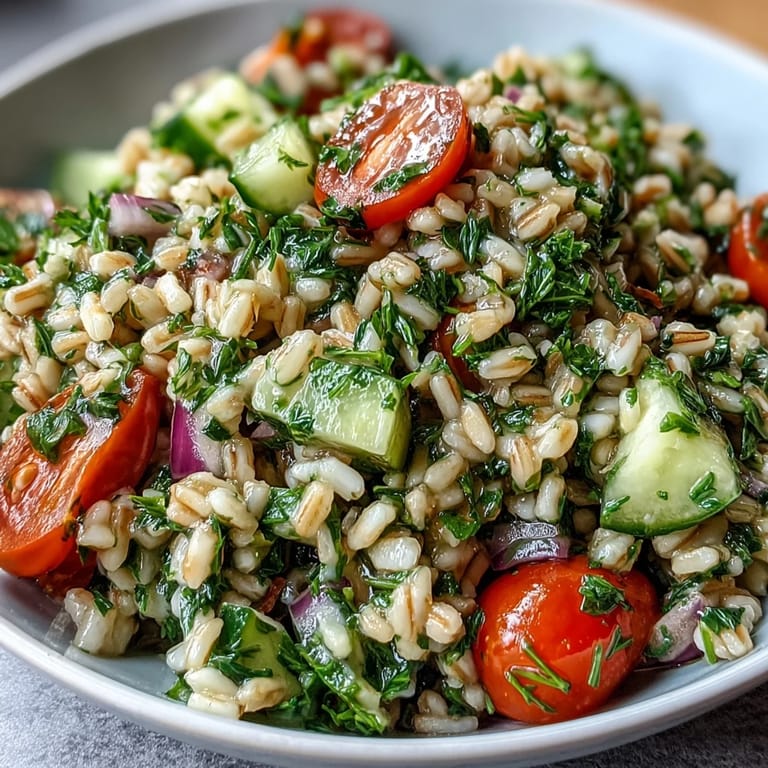
 There's a quiet moment I treasure when someone takes their first bite and their face softens—they weren't expecting something this satisfying and alive from what sounded like just a grain salad. That's when I knew this recipe had earned its place in my regular rotation.
Building Your Own Variations
Once you understand how barley loves to absorb dressing and fresh herbs, you can swap ingredients based on what's in season or what you have on hand. I've made versions with roasted beets instead of tomatoes, added crumbled feta for richness, or switched the herbs entirely to basil and chives depending on what called to me.
Storage and Make-Ahead Magic
This salad actually improves after a day in the refrigerator, as the flavors marry and the barley continues to soften slightly. Keep it in a covered container and give it a gentle stir before serving, adding a squeeze of fresh lemon if it seems to have lost its brightness.
Why This Works as Both Lunch and Side Dish
The beauty of barley salad is its versatility—serve it on its own with crusty bread for lunch, or pair it alongside roasted chicken or grilled fish where it becomes a sophisticated companion. The ratio of grain to vegetables to dressing means it's filling enough to stand alone but light enough that it won't overshadow other dishes on your plate.
- Toast some almonds or pumpkin seeds and scatter them on top just before serving for an unexpected crunch that transforms each bite.
- Feta cheese crumbles turn this into something more Mediterranean and substantial, perfect for when you want to make it a main course.
- If you prefer tangier notes, trade the lemon juice for red wine vinegar and watch how the entire personality of the salad shifts.
 Merken
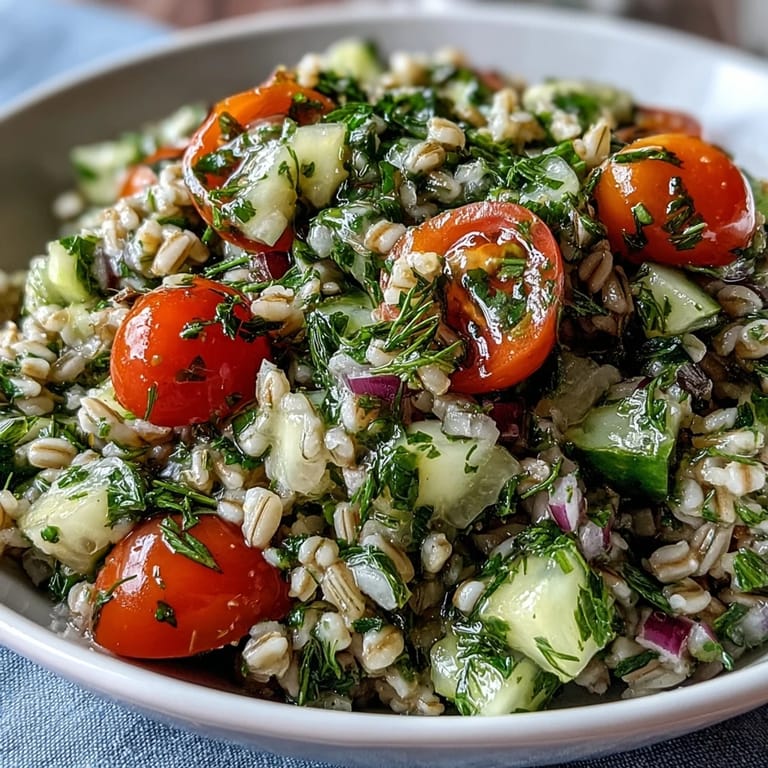
 This salad reminds me that the simplest ingredients, treated with care and dressed with intention, can become something genuinely memorable. It's proof that lunch doesn't have to be boring.
Rezept-Fragen
- → Wie lange sollte die Gerste kochen?
Die Perlgerste wird bei niedriger Hitze 25–30 Minuten gekocht, bis sie zart ist. Anschließend wird überschüssiges Wasser abgegossen und die Gerste auf Raumtemperatur abgekühlt, bevor sie mit den anderen Zutaten gemischt wird.
- → Kann ich die Gerste durch ein anderes Getreide ersetzen?
Ja, Couscous, Quinoa oder Bulgur sind hervorragende Alternativen. Beachten Sie jedoch, dass diese unterschiedliche Kochzeiten haben und das Aroma sowie die Textur des Salats leicht verändern können.
- → Wie lange hält sich der Salat im Kühlschrank?
Der Salat hält sich bis zu 2 Tage im Kühlschrank, wenn er in einem luftdichten Behälter aufbewahrt wird. Die Kräuter verlieren jedoch an Frische, daher wird empfohlen, ihn so frisch wie möglich zu genießen.
- → Welche Kräuter eignen sich am besten für diesen Salat?
Petersilie, Minze und Dill bilden die klassische Kombination. Sie können jedoch auch Basilikum, Koriander oder Schnittlauch hinzufügen, um den Geschmack anzupassen und persönliche Vorlieben zu berücksichtigen.
- → Ist dieser Salat glutenfrei?
Nein, da Gerste Gluten enthält. Für eine glutenfreie Version können Sie Gerste durch Quinoa, Reis oder couscousartiges Hirse ersetzen. Überprüfen Sie bei Verwendung von Feta-Käse auch die anderen Zutaten auf verstecktes Gluten.
- → Kann ich den Salat vorbereiten?
Ja, die Gerste kann am Vortag gekocht und im Kühlschrank aufbewahrt werden. Die Kräuter und das Dressing sollten jedoch kurz vor dem Servieren hinzugefügt werden, um optimale Frische und Textur zu gewährleisten.