Korean Beef Bowl Gochujang

Featured in: Schnelle Alltagsküche

Dieses koreanische Beef Bowl kombiniert gewürztes Rindfleisch mit feuriger Gochujang-Sauce auf fluffigem Reis. Das Gericht wird mit schnell eingelegtem Gemüse, frischer Gurke, Rettich und probiotischem Kimchi toppiert. Die Balance zwischen herzhaftem Fleisch, frischem Crunch und cremiger Sauce macht diesen Schüssel-Klassiker perfekt für einen schnellen, aber dennoch beeindruckenden weekday dinner.

Updated on Wed, 04 Feb 2026 06:46:43 GMT
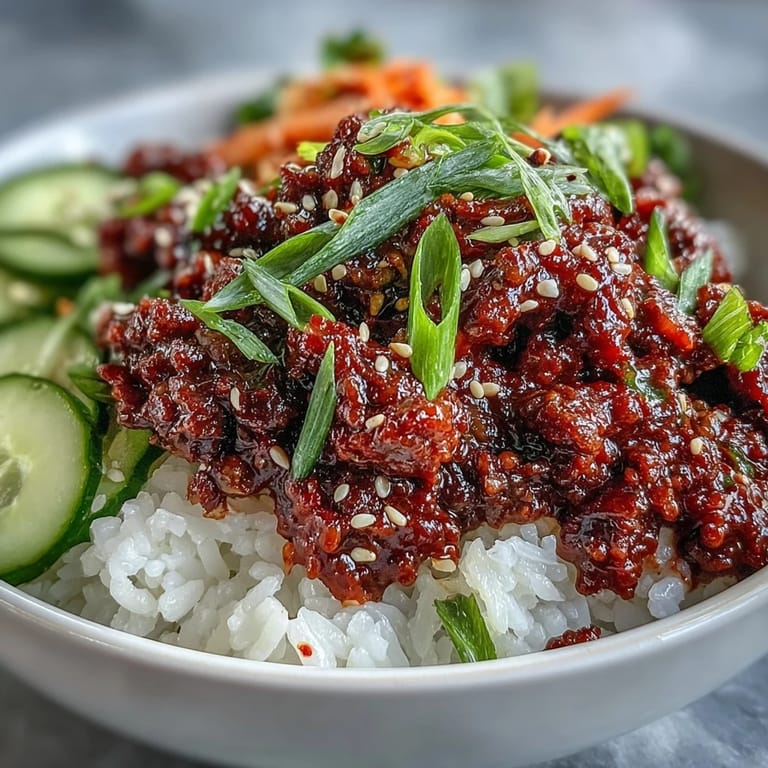
Vibrant Korean Beef Bowl with seasoned ground beef in spicy gochujang sauce, served over steamed rice and topped with crisp cucumber, radish, and tangy kimchi.  Merken
Vibrant Korean Beef Bowl with seasoned ground beef in spicy gochujang sauce, served over steamed rice and topped with crisp cucumber, radish, and tangy kimchi. | foodtraum.com

Experience the bold and vibrant spirit of Seoul in your own kitchen with this easy-to-make Korean Beef Bowl. This recipe brings together the fiery depth of gochujang-spiced ground beef and the refreshing crunch of quick-pickled vegetables, all served over a steaming bed of rice for a meal that is as visually stunning as it is delicious.

Vibrant Korean Beef Bowl with seasoned ground beef in spicy gochujang sauce, served over steamed rice and topped with crisp cucumber, radish, and tangy kimchi.  Merken
Vibrant Korean Beef Bowl with seasoned ground beef in spicy gochujang sauce, served over steamed rice and topped with crisp cucumber, radish, and tangy kimchi. | foodtraum.com

What's for Dinner Tonight? 🤔

Stop stressing. Get 10 fast recipes that actually work on busy nights.

Free. No spam. Just easy meals.

The key to this dish's success is the interplay of textures. The tender, saucy beef finds its perfect match in the crisp slices of cucumber and the bright acidity of julienned daikon and carrots. Every bite offers a harmonious blend of umami and freshness that will keep you coming back for more.

Ingredients

Tired of Takeout? 🥡

Get 10 meals you can make faster than delivery arrives. Seriously.

One email. No spam. Unsubscribe anytime.

  • For the Beef: 1 lb (450 g) lean ground beef, 2 tbsp vegetable oil, 3 cloves garlic, minced, 1 tbsp fresh ginger, grated, 3 tbsp gochujang (Korean chili paste), 2 tbsp soy sauce, 1 tbsp brown sugar, 1 tbsp rice vinegar, 1 tsp toasted sesame oil, 2 green onions, thinly sliced.
  • For the Pickled Vegetables: 1/2 cup (60 g) carrot, julienned, 1/2 cup (60 g) daikon radish, julienned, 1/2 cup (120 ml) rice vinegar, 1 tbsp sugar, 1/2 tsp salt.
  • For Serving: 4 cups cooked white rice (or brown rice), 1 cup cucumber, thinly sliced, 1/2 cup radish, thinly sliced, 1 cup kimchi, chopped, 1 tbsp toasted sesame seeds.

Instructions

1. Prepare the Pickled Vegetables
In a small bowl, combine the rice vinegar, sugar, and salt. Stir until dissolved. Add the carrot and daikon radish. Mix well and set aside to pickle while you prepare the rest of the dish.
2. Cook the Beef
Heat vegetable oil in a large skillet over medium-high heat. Add garlic and ginger, sauté for 1 minute until fragrant. Add ground beef and cook, breaking it up with a spoon, until browned and cooked through (about 5–6 minutes). Drain excess fat if needed.
3. Season the Beef
Stir in the gochujang, soy sauce, brown sugar, rice vinegar, and sesame oil. Cook for another 2–3 minutes, allowing the sauce to thicken and coat the beef. Remove from heat and stir in half the green onions.
4. Assemble the Bowls
Divide the cooked rice among 4 bowls. Top each with a generous portion of the beef mixture. Arrange pickled vegetables, cucumber, radish, and kimchi around the beef. Garnish with remaining green onions and toasted sesame seeds.
5. Serve
Serve immediately while the beef is hot and the vegetables are crisp.

Zusatztipps für die Zubereitung

To ensure the beef has the best texture, make sure the skillet is very hot before adding the meat so it browns properly rather than steaming. If you prefer a saucier beef, you can add a tablespoon of water or beef broth when stirring in the gochujang mixture.

Still Scrolling? You'll Love This 👇

Our best 20-minute dinners in one free pack — tried and tested by thousands.

Trusted by 10,000+ home cooks.

Varianten und Anpassungen

This recipe is highly versatile. You can substitute the ground beef with ground chicken or turkey for a leaner profile. For those requiring a gluten-free meal, replace the soy sauce with tamari and ensure your gochujang paste is certified gluten-free. If you want more heat, a drizzle of sriracha on top works wonders.

Serviervorschläge

Serve these bowls with a side of extra kimchi for a fermented kick. For beverage pairings, a light, crisp lager or a chilled green tea complements the spicy and savory notes perfectly. If you are serving a crowd, place the toppings in separate bowls so everyone can build their own perfect bowl.
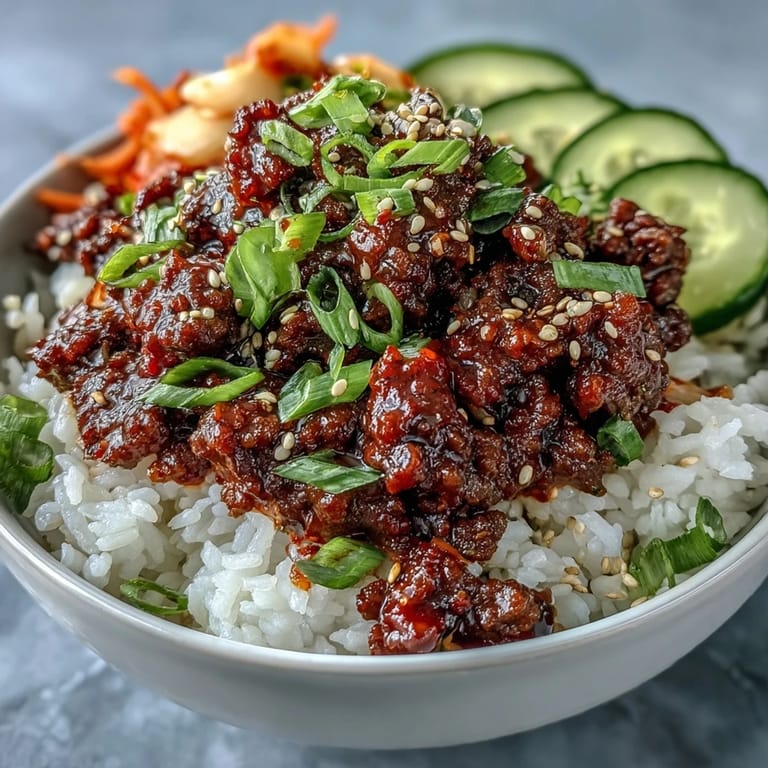
Savory Korean Beef Bowl featuring gochujang-spiced beef, fluffy white rice, and colorful quick-pickled vegetables for a balanced and flavorful meal.  Merken
Savory Korean Beef Bowl featuring gochujang-spiced beef, fluffy white rice, and colorful quick-pickled vegetables for a balanced and flavorful meal. | foodtraum.com

Whether you're looking for a quick weeknight solution or a colorful weekend feast, this Korean Beef Bowl delivers restaurant-quality flavor with minimal effort. It's a wholesome, balanced dish that brings the exciting tastes of Korean cuisine right to your dining table.

Rezept-Fragen

Was ist Gochujang?

Gochujang ist eine fermentierte koreanische Chili-Paste aus roten Chilis, Reismalz und Sojabohnen. Sie verleiht diesem Gericht seine charakteristische Würze und leichte Süße.

Kann ich das Rindfleisch ersetzen?

Ja, Sie können Hähnchen- oder Putenhack statt Rindfleisch verwenden. Für eine vegetarische Variante eignet sich gekrümeltes Tofu oder Jackfruit.

Wie lange hält sich das eingelegte Gemüse?

Das schnell eingelegte Gemüse hält sich verschlossen im Kühlschrank bis zu einer Woche. Es entwickelt mit der Zeit immer mehr Säure.

Ist dieses Gericht glutenfrei?

Verwenden Sie Tamari statt Sojasauce und achten Sie auf glutenfreie Gochujang, um das Gericht vollständig glutenfrei zu machen.

Kann ich die Beilagen vorbereiten?

Ja, Sie können das eingelegte Gemüse und den Reis einen Tag im Voraus zubereiten. Das Fleisch sollte jedoch frisch zubereitet werden.

Wie mache ich es schärfer?

Fügen Sie extra Gochujang, einen Spritzer Sriracha oder frische Chilifäden hinzu, um die Schärfe zu erhöhen.


20-Minute Dinner Pack — Free Download 📥

10 recipes, 1 shopping list. Everything you need for a week of easy dinners.

Instant access. No signup hassle.

Korean Beef Bowl Gochujang

Scharfes koreanisches Rindfleisch mit Gochujang-Sauce, Reis und eingelegtem Gemüse.

Vorbereitungszeit
20 Min.
Kochzeit
15 Min.
Gesamtdauer
35 Min.
von foodtraum Hannah Krüger


Schwierigkeit Easy

Herkunft Koreanisch

Menge 4 Portionen

Ernährungsform Ohne Milchprodukte

Zutaten

Für das Rindfleisch

01 450 g mageres Rinderhackfleisch
02 30 ml Pflanzenöl
03 3 Knoblauchzehen, fein gehackt
04 15 ml frischer Ingwer, gerieben
05 45 ml Gochujang (koreanische Chilipaste)
06 30 ml Sojasoße
07 15 ml brauner Zucker
08 15 ml Reisessig
09 5 ml geröstetes Sesamöl
10 2 Frühlingszwiebeln, dünn geschnitten

Für das eingelegte Gemüse

01 60 g Möhren, julienne geschnitten
02 60 g Daikon-Rettich, julienne geschnitten
03 120 ml Reisessig
04 15 ml Zucker
05 2,5 ml Salz

Zum Servieren

01 960 ml gekochter Reis (weiß oder Vollkorn)
02 240 ml Gurke, dünn geschnitten
03 120 ml Rettich, dünn geschnitten
04 240 ml Kimchi, gehackt
05 15 ml geröstete Sesamkörner

Zubereitung

Schritt 01

Eingelegtes Gemüse vorbereiten: In einer kleinen Schüssel Reisessig, Zucker und Salz vermischen und rühren, bis sich der Zucker aufgelöst hat. Möhren und Daikon-Rettich hinzufügen, gut vermischen und beiseite stellen, während Sie den Rest des Gerichts zubereiten.

Schritt 02

Rindfleisch kochen: Pflanzenöl in einer großen Pfanne bei mittlerer bis hoher Hitze erhitzen. Knoblauch und Ingwer hinzufügen und etwa 1 Minute anbraten, bis es duftet. Hackfleisch hinzufügen und mit einem Löffel zerbrechen, bis es braun und durch ist (etwa 5-6 Minuten). Überschüssiges Fett bei Bedarf ablassen.

Schritt 03

Rindfleisch würzen: Gochujang, Sojasoße, braunen Zucker, Reisessig und Sesamöl einrühren. Weitere 2-3 Minuten kochen, bis die Sauce eindickt und das Fleisch überzieht. Vom Herd nehmen und die Hälfte der Frühlingszwiebeln unterrühren.

Schritt 04

Schüsseln anrichten: Den gekochten Reis auf 4 Schüsseln verteilen. Jede Schüssel großzügig mit der Fleischmischung beladen. Eingelegtes Gemüse, Gurke, Rettich und Kimchi um das Fleisch anordnen. Mit restlichen Frühlingszwiebeln und gerösteten Sesamkörnern garnieren.

Schritt 05

Servieren: Sofort servieren.

You Just Made Something Great 👏

Want more like this? Get my best easy recipes — free, straight to your inbox.

Join 10,000+ home cooks. No spam.

Benötigte Utensilien

  • Große Pfanne
  • Rührschüsseln
  • Schneidebrett und Messer
  • Reiskocher oder Topf zum Kochen von Reis
  • Messlöffel

Allergene

Überprüfe jede Zutat auf mögliche Allergene. Im Zweifel konsultiere eine medizinische Fachkraft.
  • Enthält Soja (Sojasoße, Gochujang) und Sesam.
  • Kimchi kann Meeresfrüchte enthalten (Fischsauce, Garnelen), daher bei Allergien Etiketten überprüfen.
  • Immer Zutatenetiketten auf mögliche Allergene überprüfen.

Nährwerte pro Portion

Alle Angaben dienen zur Orientierung und ersetzen keine professionelle Beratung.
  • Kalorien: 520
  • Fett: 18 g
  • Kohlenhydrate: 64 g
  • Eiweiß: 25 g

Cooking Shouldn't Be Hard ❤️

Get a free recipe pack that makes weeknight dinners effortless. Real food, real fast.

Free forever. Unsubscribe anytime.