 Merken
 There's something about the sizzle of beef hitting a hot wok that makes you feel like you're cooking something worth the effort. I discovered this bowl while standing in a crowded Seoul food court, watching a vendor layer rice, seared beef, and bright vegetables with the kind of casual confidence that only comes from making something a hundred times. The balance of umami, heat, and cool crunch completely changed how I thought about weeknight dinners, and now it's become my go-to when I want something that feels indulgent but comes together in under an hour.
I made this for my sister during a chaotic Tuesday when she'd had a rough day, and watching her face light up at that first bite of tangy pickled carrot against spicy mayo reminded me why I love cooking for people. She asked for the recipe before she'd even finished, which was the highest compliment I could get.
Ingredients
- Flank steak or sirloin, thinly sliced (500 g): Flank has enough marbling to stay tender when sliced thin, and it drinks up the marinade like a sponge—freeze it for 30 minutes before slicing to keep everything uniform and easier to work with.
- Soy sauce (2 tbsp): The backbone of the marinade, bringing that essential umami that makes you close your eyes on the first bite.
- Sesame oil (1 tbsp): Use toasted sesame oil, not the light kind—a little goes a long way and it's what gives this that authentic nutty aroma.
- Fresh ginger, grated (1 tbsp): Grate it just before mixing so you get all those volatile oils that make the beef sing.
- Garlic, minced (2 cloves): Fresh is non-negotiable; jarred will taste flat against everything else happening in the bowl.
- Brown sugar (1 tbsp): Balances the salt and soy, and helps the beef caramelize properly when it hits the heat.
- Rice vinegar (1 tbsp): Adds brightness without the harshness of regular vinegar, which I learned the hard way.
- Gochujang (1 tsp, optional): If you want that authentic Korean fermented heat, add it—the umami it brings is worth the complexity.
- Black pepper (1/4 tsp): Fresh cracked, not the pre-ground stuff gathering dust in your cabinet.
- Jasmine or short-grain rice (2 cups cooked): Jasmine's subtle floral sweetness complements the savory beef, and the stickiness holds everything together beautifully.
- Carrots, julienned (1 cup): These become your palate-cleansing brightness, and pickling them ahead means you can assemble everything at the last minute.
- Rice vinegar for pickling (1/3 cup): The same rice vinegar creates harmony across flavors instead of competing notes.
- Sugar for pickling (1 tbsp): Just enough to round out the acidity and make the carrots actually want to sit in the brine.
- Salt for pickling (1/2 tsp): This draws moisture from the carrots, creating that perfect crisp texture.
- Cucumber, thinly sliced (1 cup): Keeps everything cool and fresh against the warm beef and spicy mayo.
- Fresh jalapeño, thinly sliced (1): The living, breathing heat that's different every time depending on the pepper—some are gentle, some wake you up.
- Toasted sesame seeds (2 tbsp): Buy them toasted or toast them yourself for 2 minutes in a dry pan; raw ones are flavorless and chewy.
- Green onions, thinly sliced (2): The final aromatic brightness that ties the whole bowl together.
- Mayonnaise (1/3 cup): Acts as the creamy anchor for your spicy sauce, binding everything with richness.
- Sriracha (1–2 tbsp): Adjust to your heat tolerance—start with less and build up rather than scorching everyone at the table.
- Lime juice (1 tsp): One tsp cuts through the heaviness and makes the sauce sing instead of feeling one-dimensional.
Tired of Takeout? 🥡
Get 10 meals you can make faster than delivery arrives. Seriously.
One email. No spam. Unsubscribe anytime.
Instructions
- Start the pickled carrots first:
- Combine rice vinegar, sugar, and salt in a small bowl, stirring until the sugar actually dissolves. Toss in your julienned carrots and let them sit for at least 20 minutes—this gives the brine time to draw out moisture and create that perfect crisp-tender texture that'll contrast beautifully against the warm beef.
- Build the marinade while carrots work:
- Mix soy sauce, sesame oil, ginger, garlic, brown sugar, rice vinegar, gochujang if using, and black pepper in a large bowl. The smell alone will make you feel like you're cooking something special.
- Get the beef in the marinade:
- Add your thinly sliced beef to the marinade and toss until every piece is coated, making sure nothing's hiding underneath. Let it sit for 15–20 minutes while you prep everything else—the marinade won't overpower the beef like it might if you left it longer.
- Cook your rice if you haven't already:
- Follow package instructions, but if you're using jasmine rice, use a 1:1 ratio of rice to water for fluffier results. Have it warm and ready to go because assembly happens fast once the beef hits the pan.
- Make the sriracha mayo:
- Whisk together mayonnaise, sriracha, and lime juice in a small bowl. Taste as you go—sriracha varies wildly between brands in terms of heat and saltiness, so you might need more or less depending on what you have.
- Get your skillet smoking hot:
- Heat a large skillet or wok over high heat until a drop of water dances across the surface. Working in a single layer keeps the beef from steaming—crowding the pan means grayish meat instead of golden-brown seared perfection.
- Sear the beef without moving it:
- Add marinated beef to the hot skillet and resist the urge to stir for the first 2–3 minutes. The browning that happens on that first side is what makes the whole bowl taste like you actually know what you're doing in the kitchen.
- Finish cooking and drain pickled carrots:
- Flip the beef after 2–3 minutes and cook another 1–2 minutes until just cooked through. While it's finishing, drain your pickled carrots—you want them crisp, not swimming in brine.
- Assemble your bowls:
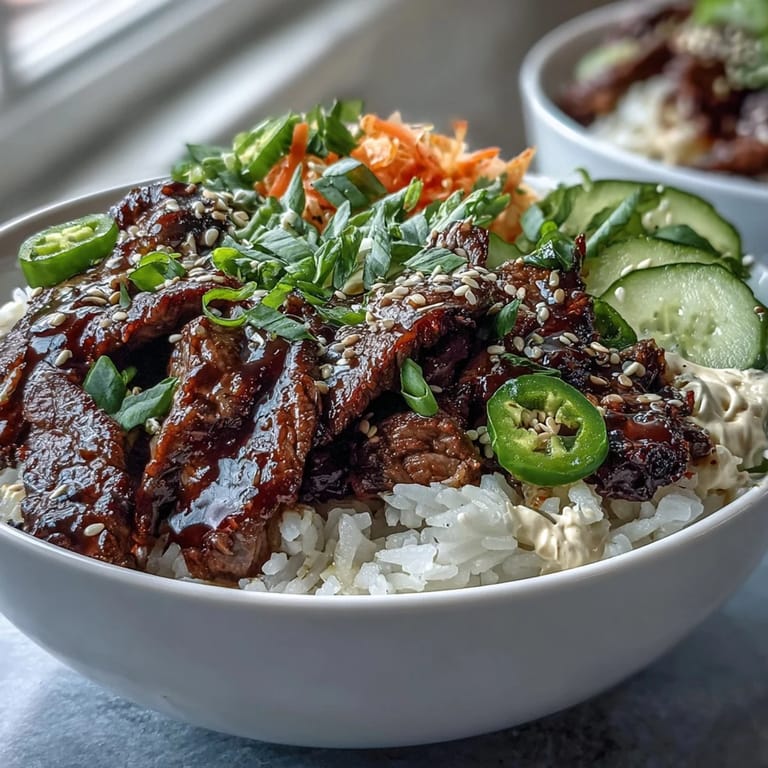
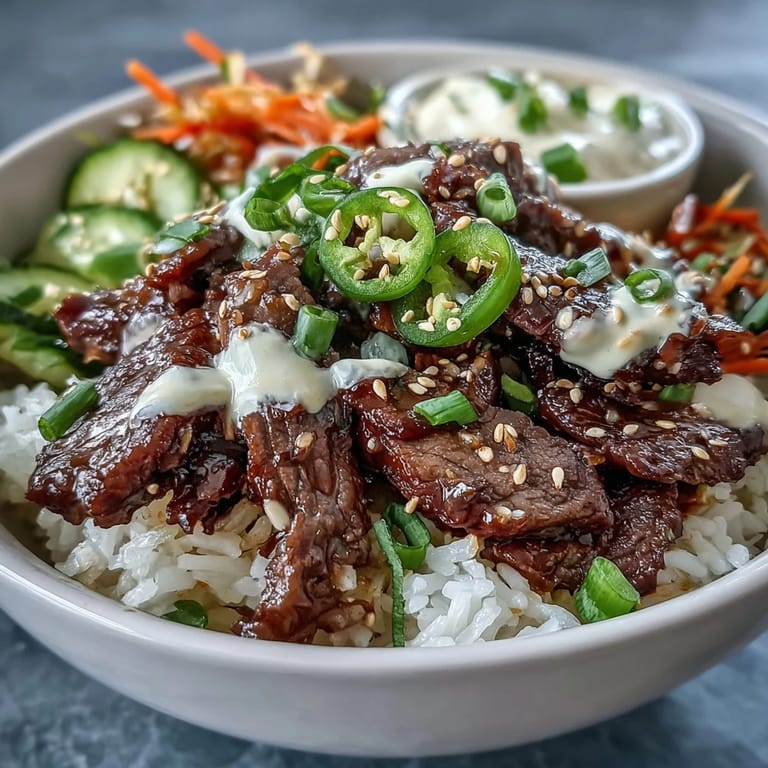
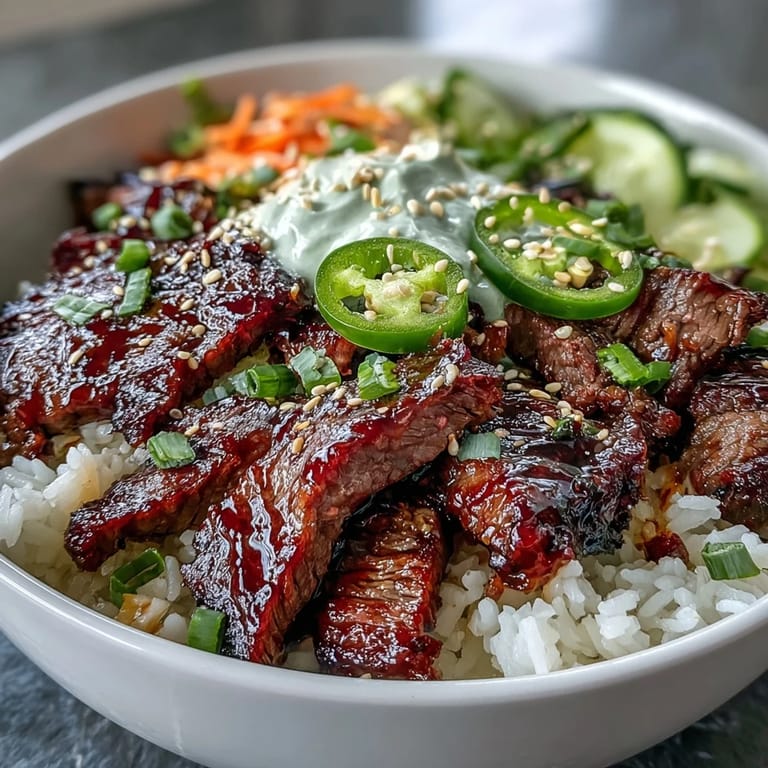
- Divide warm jasmine rice into four bowls, then layer on the seared beef, drained pickled carrots, cucumber, jalapeño slices, green onions, and sesame seeds in whatever pattern makes you happy. Drizzle generously with sriracha mayo and serve immediately while everything's still warm.
 Merken
 There was a moment when my roommate came home to find me assembling these bowls, and instead of just grabbing one, she sat down at the counter and we ended up talking for an hour over dinner. The bowl became less about the individual components and more about the fact that good food creates space for connection.
Why This Bowl Became My Regular
I stopped making this a special occasion meal after realizing I could prep components on a Sunday and assemble a fresh bowl any night of the week. The pickled carrots actually improve after a day in the fridge, the beef cooks in minutes, and suddenly you're eating something restaurant-quality at your kitchen table on a Wednesday.
Customizing Your Bowl
This is where the recipe becomes yours instead of just mine—I've made it with avocado layered underneath the rice, with a fried egg on top for extra richness, with edamame for more protein, and once with crispy fried onions because I had them and regret nothing. The marinade stays the same, but everything else is an invitation to riff.
Making It Your Own
My friend with a dairy sensitivity swapped the mayo for vegan mayo and insisted the sriracha sauce was even better—somehow lighter and more straightforward. Another friend who doesn't eat meat simply marinated extra vegetables in the same sauce and created something equally satisfying.
- For dairy-free, use vegan mayo or tahini thinned with lime juice for the sriracha base.
- Brown rice or cauliflower rice works if you want something lighter, though the texture changes how the bowl feels completely.
- Gochujang is optional but it's what whispers authenticity—leave it out if your audience can't handle fermented funk.
 Merken
 This bowl has become my answer to the question of what to cook when you want something that tastes like you tried but didn't stress. Every time I make it, someone asks for the recipe, and that never gets old.
Rezept-Fragen
- → Wie lange muss das Rindfleisch marinieren?
Das Rindfleisch sollte mindestens 15-20 Minuten in der Sesam-Ginger-Marinade ziehen. Für intensiveren Geschmack kann es bis zu 2 Stunden mariniert werden, allerdings nicht länger als 4 Stunden, da das Fleisch sonst zu weich wird.
- → Kann ich das Fleisch ersetzen?
Ja, Sie können statt Flank Steak auch Hühnerbrust, Tofu oder Seitan verwenden. Die Marinade passt hervorragend zu verschiedenen Proteinen. Achten Sie darauf, die Garzeit entsprechend anzupassen.
- → Wie mache ich das Gericht glutenfrei?
Ersetzen Sie die Sojasauce durch Tamari oder glutenfreie Sojasauce. Verwenden Sie Reisnudeln statt Reis oder achten Sie darauf, dass Ihre Soße keine versteckten Glutenquellen enthält.
- → Sind die eingelegten Möhren notwendig?
Die eingelegten Möhren bringen eine willkommene Säure und Knackigkeit, die das fettige Fleisch perfekt ausbalanciert. Sie können sie durch anderes eingelegtes Gemüse wie Rettich oder Chinakohl ersetzen oder weglassen.
- → Wie lagere ich die Reste?
Lagern Sie Komponenten getrennt in luftdichten Behältern im Kühlschrank. Das Fleisch hält sich 3-4 Tage, der Reis 2-3 Tage. Die Mayo sollte innerhalb einer Woche verbraucht werden. Erwärmen Sie das Fleisch vor dem Servieren.
- → Kann ich die Schärfe anpassen?
Absolut. Reduzieren Sie die Jalapeños und Sriracha für eine mildere Version. Fügen Sie zusätzlich Gochujang oder Chiliflocken hinzu, wenn Sie es schärfer mögen. Die Mayo kann schrittweise angepasst werden.